Advancing field research, sharing findings, and strengthening connections with farmers and outreach partners.
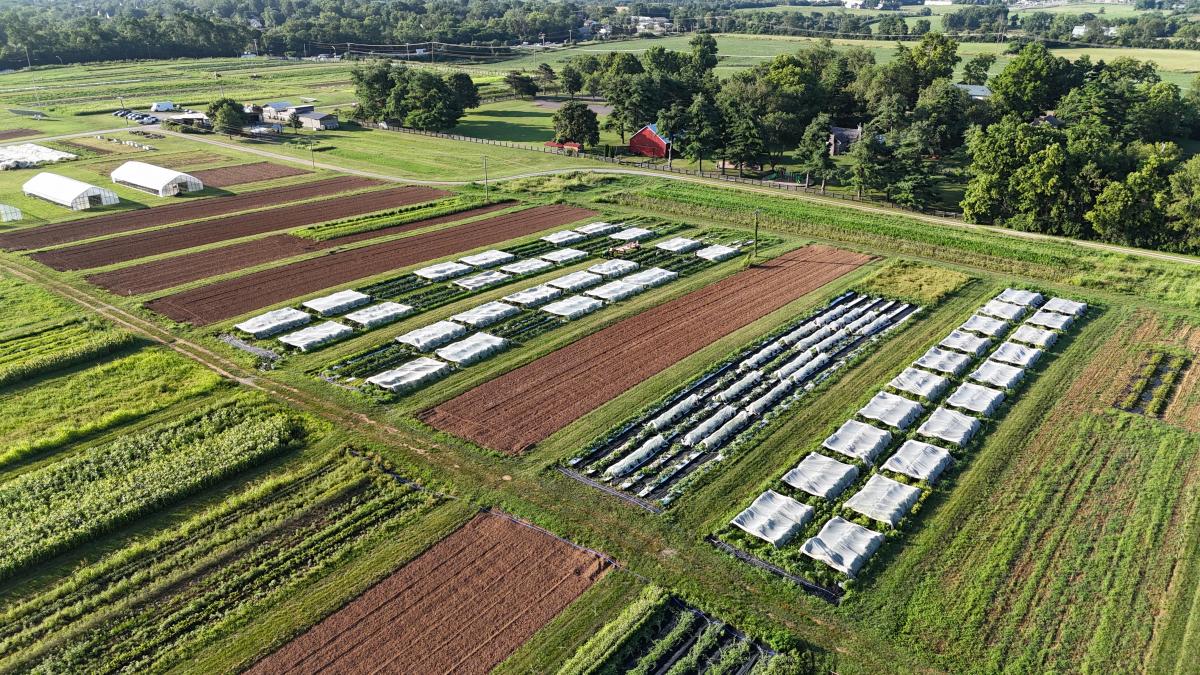
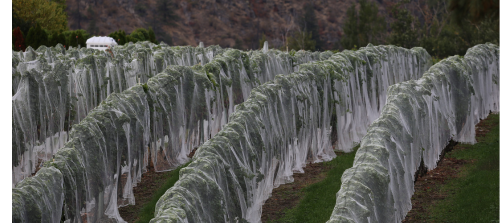
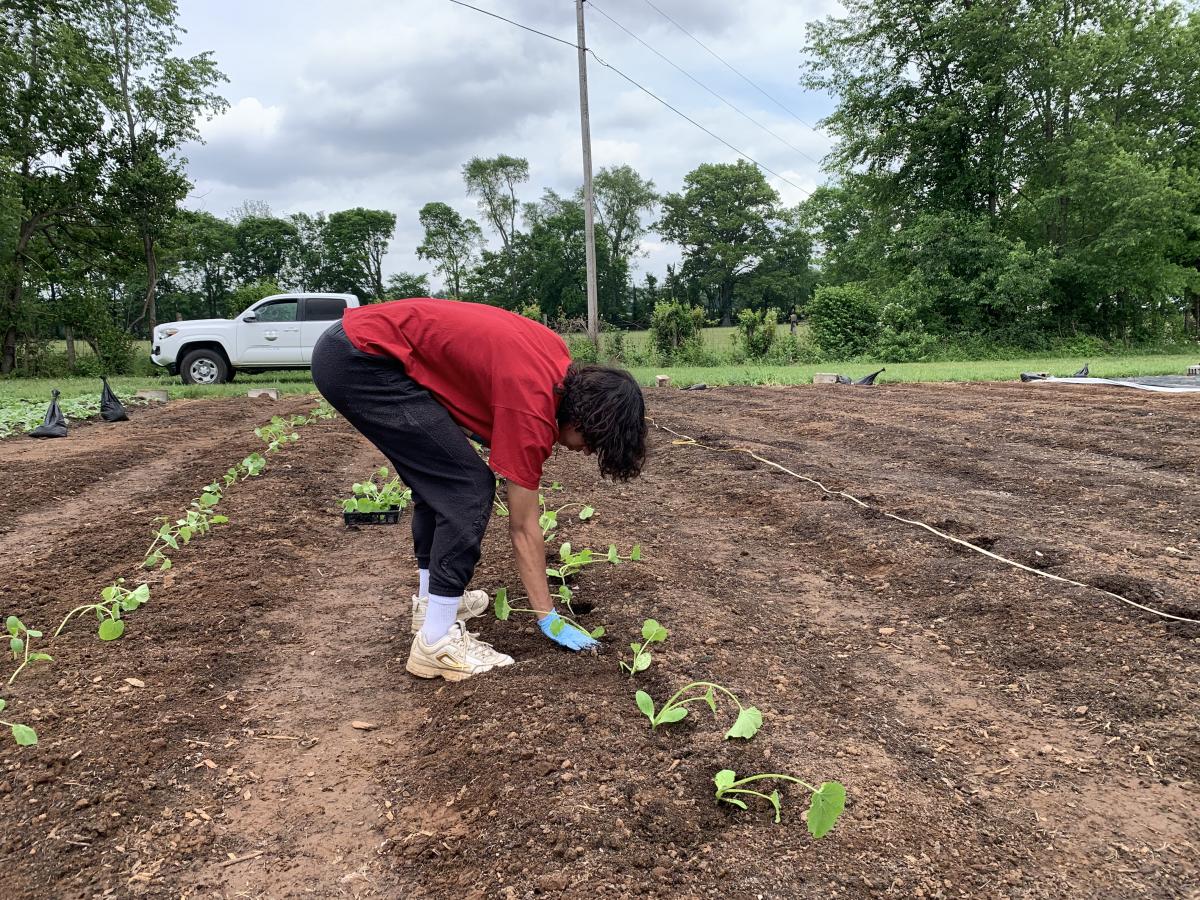
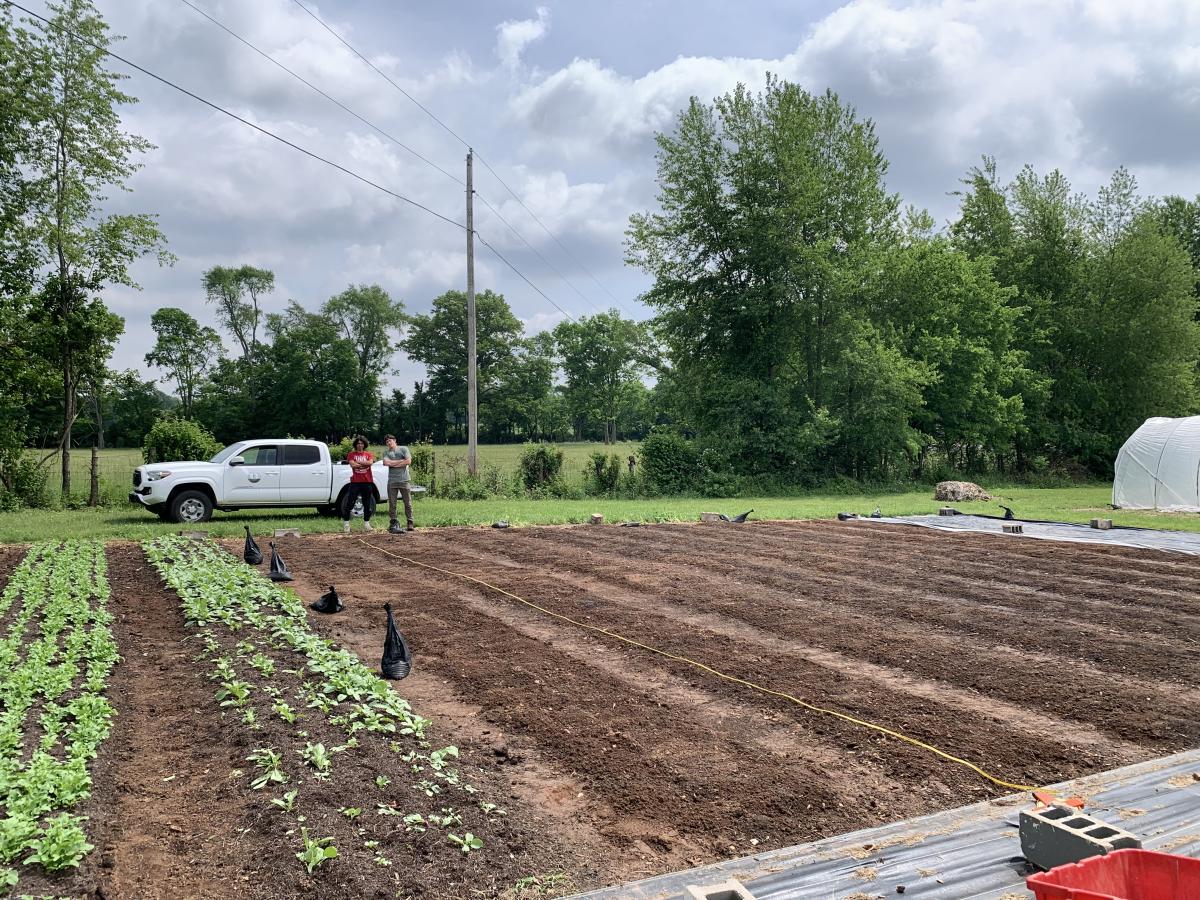
Growing season is in full swing with trials underway to examine the utility of row covers across crops, regions, and production conditions, with a focus on pest management, disease suppression, crop quality, and economic viability.
Q2 has also been filled with research presentations:
Cornell researcher Kaitlin Diggins presented at the 2026 IGSA Graduate Research Symposium in Ithaca, New York. Her talk, titled “Expanding Integrated Pest Management Systems for Organic Vegetable Production in New York,” highlighted work studying mesotunnels in cucurbit systems and helped share project findings with a broader graduate research audience. Kaitlin's work was also featured on LinkedIn. Check it out!
University of Kentucky team member Elaine Losekamp presented a research poster at the 8th Annual Kentucky Local Food Systems Summit that brought together farmers, chefs, educators and community advocates to network and learn.
The project is also expanding its consumer reach through collaboration with Organic Voices, helping translate research findings into accessible materials to reach a broader audience.
As the 2026 field season continues, the team is continuing to build knowledge alongside and for organic farmers!
4/1/2026
Q1 2026: Conferences, Advisory Panel, and Spring Field Season
Crops Under Cover kicked off 2026 with a busy season of outreach, partner engagement, and preparation for another year of field research.
In January, members of the research team attended the the 15th Annual Organic Association of Kentucky Conference and the 2026 Kentucky Fruit and Vegetable Conference. Representatives from the University of Kentucky’s Gonthier Lab connected with farmers, agricultural professionals, and organic community members about mesotunnels, row covers, and ongoing research across multiple crop systems.
In February, the Crops Under Cover team met with the project Advisory Panel to share updates and recent findings which included highlights from new statistical and economic analyses, insights from the National Survey, and an overview of outreach and social media strategies.
Across project sites, research teams began preparing for another year of experiments:
At Cornell, muskmelon research will focus on how mesotunnels influence key cucurbit diseases.
At Iowa State, graduate student researchers will expand research in brassica systems, with a particular focus on Alternaria leaf spot.
At the University of Kentucky, researchers will begin the season with a bok choy and napa cabbage trial evaluating the effects of mesotunnels on flea beetle populations.
We're looking forward to another season of collaboration, organic insights, and farmer friendly resources!
12/1/2025
2025 Insights and Emerging Themes
Reducing Pests & Boosting Yields
The 2025 season’s field trials have shown strong evidence that mesotunnel systems can help organic growers tackle pest, weed, and climate challenges. Across Kentucky, New York, and Iowa, researchers conducted replicated field experiments and implemented 27 on-farm trials with participating growers. Row covers consistently reduced insect pressure and increased marketable yields in crops including bok choy, eggplant, cucumbers, muskmelon, broccoli, and cabbage.
Researchers also tested biological controls, weed management tools, and climate mitigation strategies, finding that landscape fabric paired with mesotunnels delivered some of the strongest results. These multi-state trials are helping identify the most effective management combinations for organic growers.
Labor Needs and Profit Potential
To understand the real-world costs of row covers, the research teams in Kentucky, New York, and Iowa also tracked labor, inputs, machinery use, and yields throughout the season. Early findings show that labor is the most significant cost driver across systems, but that row covers can become profitable when materials are reused across multiple seasons.
Researchers are now analyzing economic data across states, helping create a clearer picture of return-on-investment for diversified organic farms. Deeper economic analysis will continue through 2026.
Farmer and Consumer Perceptions
A national organic farmer survey distributed to approximately 2,000 growers across 10 states yielded over 400 responses. Findings highlight key adoption barriers, and levels of row-cover knowledge among other information, and are now informing topical reports designed to guide extension and outreach strategies.
A consumer willingness-to-pay field experiment conducted in Lexington, KY in July 2025 engaged over 900 shoppers! Preliminary results show strong price sensitivity toward vegetables produced under plastic-based protection systems, and ongoing analysis is exploring how messaging, sustainability perceptions, and consumer values influence purchase decisions and demand.
(Learn more by checking out these reports in the resources section)
Outreach Momentum
This year, the project expanded its reach through in-person events and digital engagement including:
14 grower presentations and 8 academic talks
27 on-farm trials across the Northeast, Midwest, and Southeast
2 extension publications, 1 topical report, and 1 grower workshop
Digital outreach generating over 40,000 views and nearly 3,000 visits to the UK project website
63 Instagram posts and over 550 stories that resulted in 89,500 views.
9 YouTube videos and 42 shorts with a combined 23,500 views.
Strategic coordination with Organic Voices in years 3 and 4 of the project will grow our reach, ensuring that research insights reach growers, consumers, and industry partners nationwide.
10/2/2025
Summer research updates
Project teams across Kentucky, Iowa, and New York continued evaluating the impacts of fine-mesh row covers on insect pressure and weed management strategies by repeating and refining their 2024 trials.
The Kentucky team conducted four pest management experiments in spring bok choy, summer eggplant and cucumbers, and fall napa cabbage, along with a weed management trial in summer eggplant. The Iowa team implemented three pest management experiments in spring broccoli, summer eggplant, and fall napa cabbage, plus a weed management experiment in spring broccoli. The New York team ran two integrated pest and weed management trials in summer muskmelon and fall red cabbage.
All teams continue to collect economic data across these core studies, and analysis of 2024 datasets is nearly complete. In addition, a Willingness to Pay (WTP) survey was conducted at the Lexington, KY farmers markets in July 2025 to assess consumer perceptions of row covers, plastics, and insecticide use in cucumber production—yielding responses from roughly 900 shoppers!
8/25/2025
Smarter Organic Farming: Video Guides from Iowa State
The Iowa State team is on a role! Check out researchers Smriti Chaudhary and Akshaya Thinakaran' series of educational videos designed for organic growers exploring integrated pest management strategies. The videos highlight how mesotunnels can reduce pest pressure, improve crop health, and enhance yields.
They dive into practical, field-tested insights on key production topics, including weed fabric vs. cover crops for weed management, identifying and managing plant diseases, planting tips for optimizing crop establishment, and general pest control strategies.
Weed Fabric vs. Cover Crops – How They Impact Broccoli Growth
Field Trials Expand Across New York to Support Organic Muskmelon Production
The Cornell team is hitting the road for muskmelon research! This season, they're partnering with three on-farm collaborators to replicate muskmelon cultivar trials near the Vermont border, the Massachusetts border, and in Central NY. These relatively diverse locations complement the core research site at Cornell AgriTech in the Finger Lakes and allow researchers to test strategies across a range of soils and climates.
Advisory board member Dale-Ila Riggs and Don Miles are hosting one of the key trial sites.
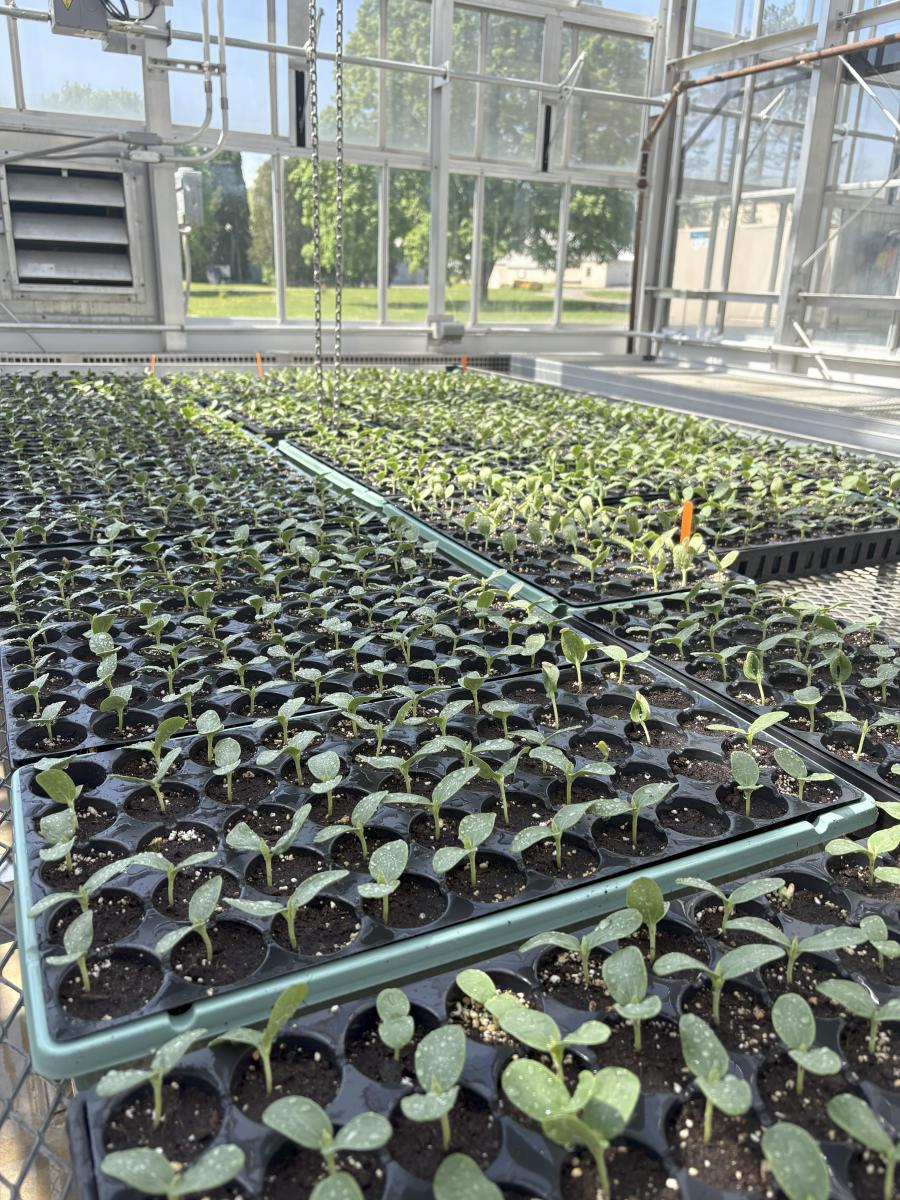
This year, the research team started over 1,000 muskmelon seedlings to ensure and abundance of healthy transplants for all plots. These will be used in the integrated systems trial, which evaluates how weed suppression (cover crops vs. landscape fabric), pest exclusion netting (85g mesh), and OMRI-listed pesticide use interact to affect yield, pest damage, and disease in organic systems.
Muskmelon was chosen for its vining growth, which improves airflow in tunnels, and for its high market value. Past trials found that bushing cucurbits (like zucchini) limited airflow, increasing foliar disease risk, and often didn’t justify the labor required for netting in low-input operations.
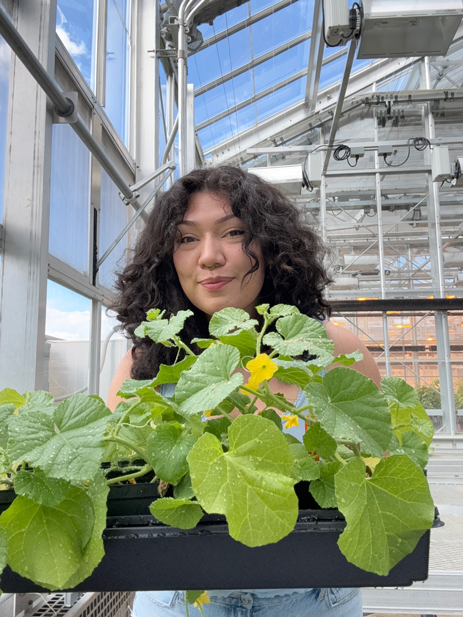
At the 3–4 leaf stage, the plants are already flowering—a crucial stage for pollinator activity but also a peak time for striped cucumber beetle pressure. The bright yellow flowers attract both bees and pests, making this a critical window for evaluating the effectiveness of netting and other strategies.
The team has also laid landscape fabric across the research plots, marking a milestone in the weed management portion of the trial. Cover crop treatments have also been seeded and are beginning to emerge.
Next up: transplanting and netting installation.
We’re excited to see how these integrated systems perform in the field!
6/20/2025
Kentucky On-Farm Trials: Row Cover Installation in Action
We're excited to share a some snapshots from ongoing row cover trials at the University of Kentucky, where researchers are testing strategies to manage pest pressure in organic vegetable production.
Site 1
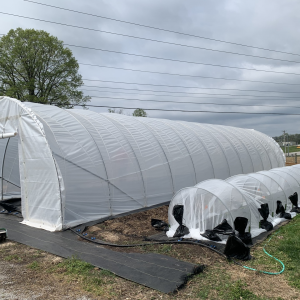
A mesotunnel covering zucchini sits beside a caterpillar tunnel used for other crops. This producer grows vegetables year-round using season extension tools like row covers and high tunnels.
Site 2
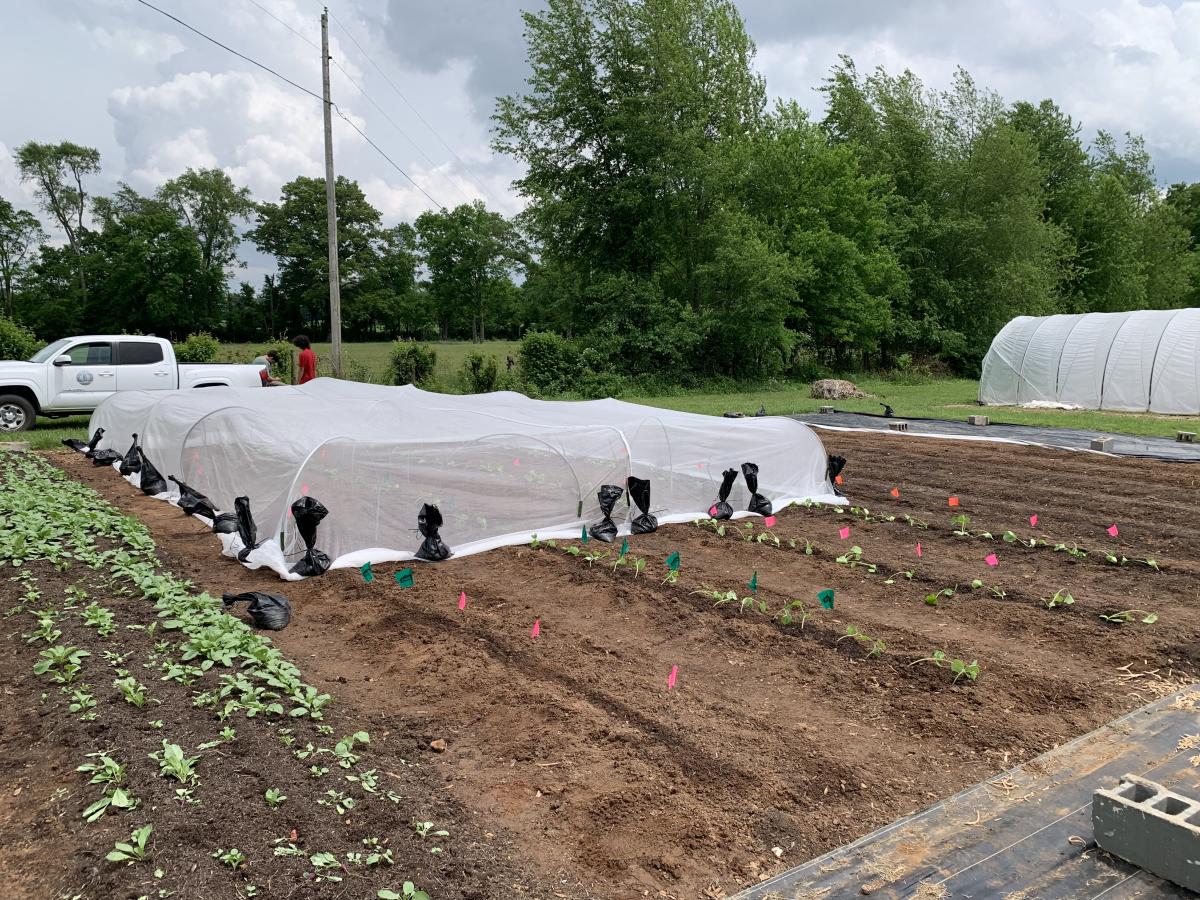
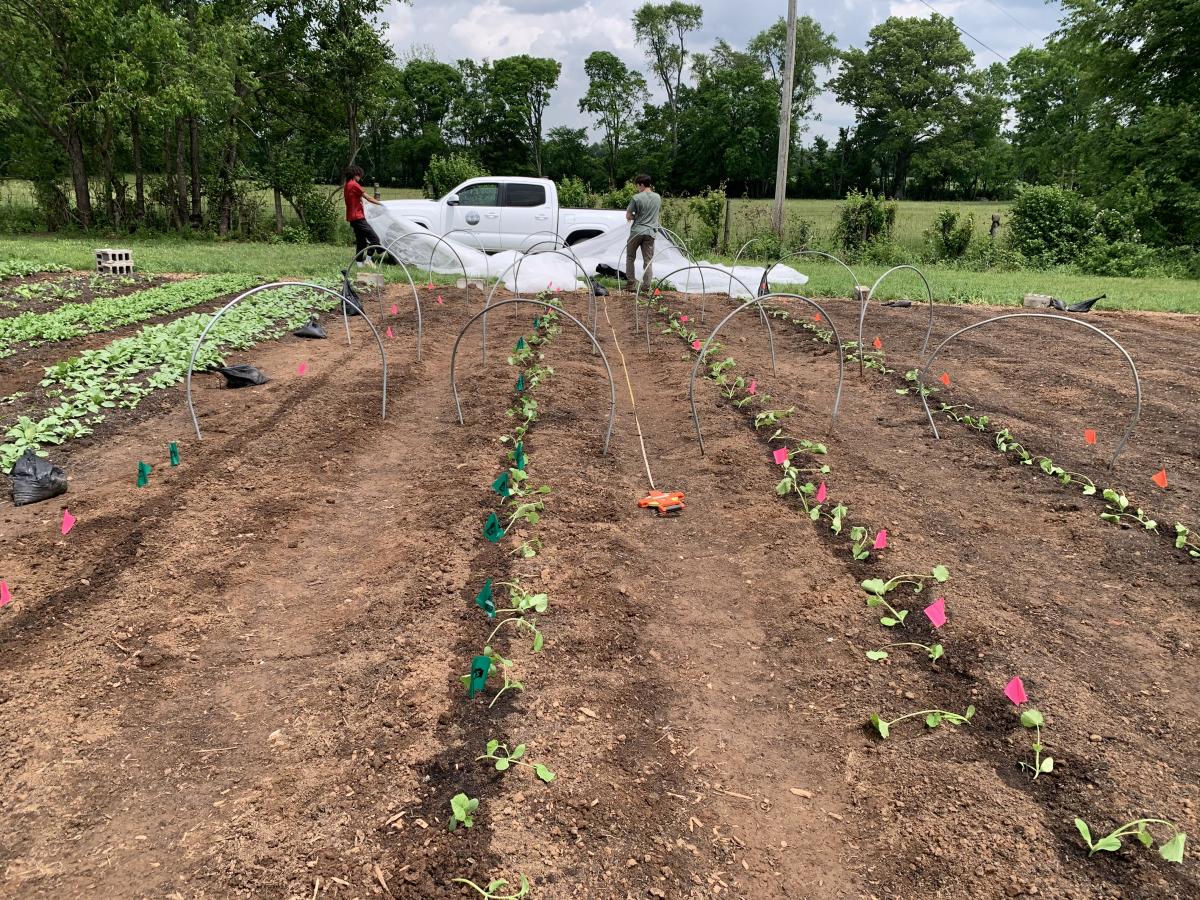
Step-by-step images show row cover installation for beans, cucumbers, and zucchini. The grower is particularly interested in reducing damage from squash bugs and cucumber beetles—persistent pests in this region.
Site 3
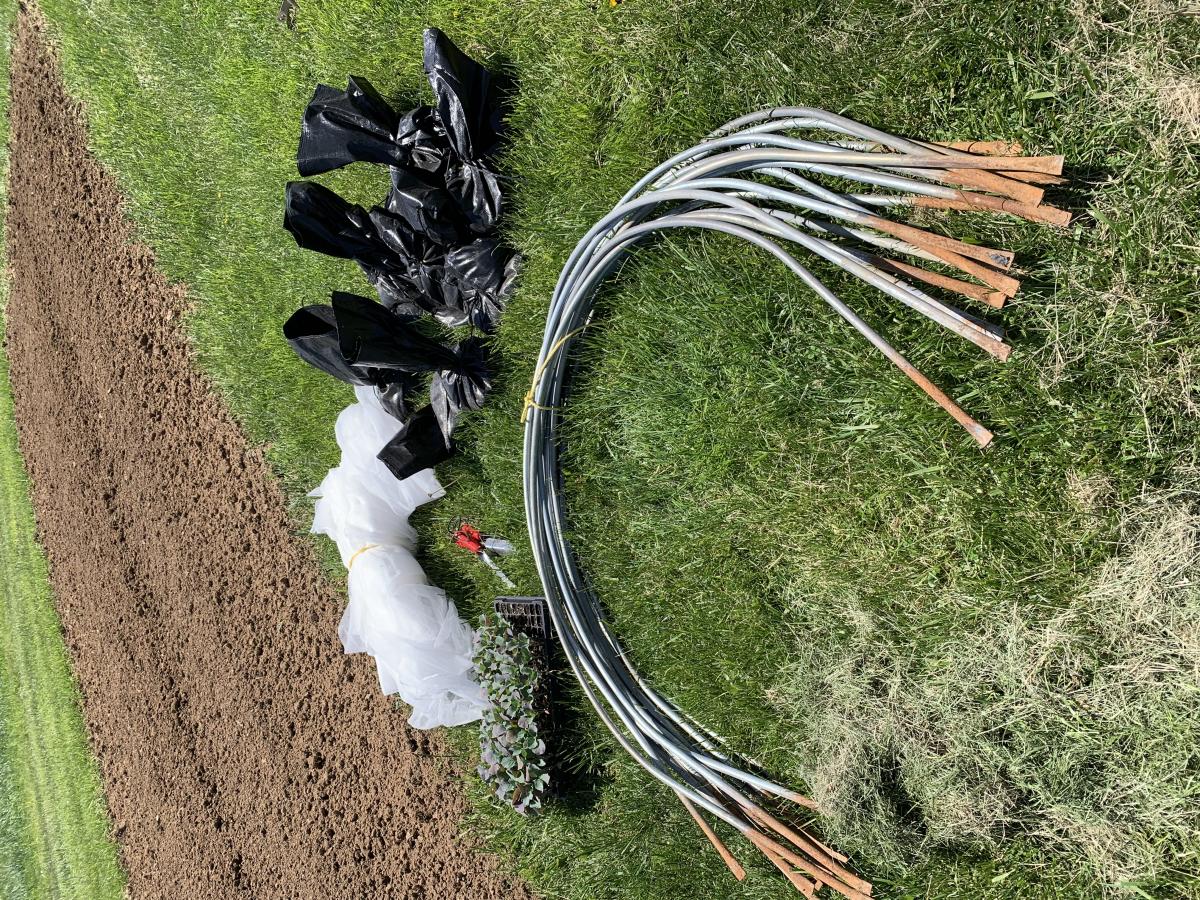
Supplies like hoops, sandbags, and transplants are laid out for broccoli production under row covers. This is the grower’s first time cultivating broccoli, with row covers offering a chance to prevent pest issues from flea beetles, Harlequin bugs, and caterpillars.
5/21/2025
Investigating Consumer Preferences for Mesotunnel-Grown Cucumbers
This July, the team is beginning a project aimed at understanding consumer preferences for cucumbers grown using mesotunnels—the cutting-edge row cover technology at the center of this project. The willingness-to-pay experiment will take place at the Lexington Farmers Market and is designed to provide insights into how much consumers value this type of farming innovation.
Mesotunnels offer significant potential to reduce pesticide use and improve crop resilience, making them a promising tool for modern pest and climate challenges in our agricultural system. By engaging directly with market participants, this study will generate data to guide the potential adoption of mesotunnel technology across the United States.
Huge thanks to John Bell of Elmwood Stock Farm, Josh England of the Lexington Farmers Market, and all other partners for their collaboration and support in getting this study underway!
2/11/2025
Crops Under Cover Project Update
The Crops Under Cover team recently held an exciting in-person meeting hosted by the University of Kentucky. This gathering brought together researchers and collaborators from our partner institutions—Cornell University, Iowa State University, and The Organic Center. The meeting served as a valuable opportunity to strengthen connections, share updates, refine strategies, and advance our collective efforts to support organic farmers in addressing critical challenges such as pest management, weed control, and climate resilience.
Through engaging discussions on project updates and strategic planning sessions, the group continued to investigate mesotunnel systems while taking time to explore the local agricultural scene:
• Farm Tours: We visited FoodChain Farms, an impressive urban aquaponics farm, and explored the University of Kentucky South Farm, which demonstrates the unique juxtaposition of agriculture amidst urban expansion.
We also made sure to find some time to watch the Super Bowl and enjoy some expertly roasted coffee from PI's David Gonthier's classes Wake Up and Smell the Coffee, and Coffee Sensory Analysis!
For the latest updates, visit the Crops Under Cover YouTube page and website. You’ll find an ever-growing collection of videos and resources designed to benefit farmers, consumers, and industry professionals alike.
2/6/2025
Follow us on social! New Instagram Handle
Follow along with the project on our new Instagram handle : @crops_under_cover for photos and updates on the project's progress.
5/20/2024
Crops Under Cover: First-Year Research Highlights on Row Covers
Crops Under Cover is a collaborative research group working across the Midwest, Southeast, and Northeast U.S. to explore how row covers can help growers tackle challenges in pest, weed, and climate management. Partnering with The Organic Center, we’ve just wrapped up our first year of research and are excited to share the results!
Kentucky:
Row covers boosted marketable yields for crops like patty pan squash, cucumbers, watermelon, brussels sprouts, eggplant, and napa cabbage. Combining row covers with organic insecticides significantly increased bok choy yields, while using landscape fabric under row covers was particularly effective for eggplant weed management. Iowa:
Row covers paired with organic insecticides reduced pest damage in broccoli, while weed management with landscape fabric not only controlled weeds but also increased eggplant yields. Additional data on bok choy and climate impacts is currently under review. New York:
For muskmelon and mini red cabbage, row covers combined with organic insecticides significantly reduced pest damage. Adding landscape fabric to the mix delivered the best overall results, including higher marketable yields. Research on mini red cabbage is still underway—stay tuned for updates!
As we gear up for next season, we’re excited to continue exploring solutions for growers. Stay tuned and visit us for the latest updates on our findings!
10/17/2023
University of Kentucky researcher leads organic farming advancements using mesotunnels in $3.5 million grant
David Gonthier and his team highlight mesotunnels as a potential dual solution to pest and climate challenges for organic products.
Diversification continues to be an important part of organic agriculture. Organic growers’ commitment to this practice opens new doors to markets, acts as a safeguard against risks, promotes biodiversity and fosters the growth of robust local communities and economies. However, organic diversification comes with its own set of challenges.
University of Kentucky Martin-Gatton College of Agriculture, Food and Environment researchers aim to bring predictability to the organic market thanks to a $3.5 million grant from the U.S. Department of Agriculture’s Organic Agriculture Research and Extension Initiative (OREI) program.
“Mesotunnels are essentially row covers made of nylon fine-mesh nets, supported by tall hoops, designed to serve as an effective barrier against insect pests and insect-transmitted diseases,” Gonthier, an assistant professor in the UK Department of Entomology, said. “These are durable, breathable and light-permeable mesh nets that may also protect against some adverse weather conditions.”
The main objective is to address the challenges organic farmers face while cultivating fruits and vegetables in the nation’s Southeast, Midwest and Northeast regions. The research involves conducting field experiments and on-farm mesotunnel trials with a wide range of crops, including broccoli and cabbage, squash and melons, and eggplant.
“This project does not merely stop at identifying the potential of mesotunnels,” said Kathleen Fiske, a doctoral student working on the project. “It also delves into innovative strategies to seamlessly integrate mesotunnels into diversified organic fruit and vegetable rotations. The goal is to understand how mesotunnels can enhance crop protection and how they can strategically employ them to maximize grower profits.”
The research will also address how growers perceive mesotunnels relative to other protection strategies, including pesticide use.
“While mesotunnels reduce insecticide use, they are made of plastic and there is growing concern surrounding plastic use in our food system from the field to the grocery store,” Gonthier said. "Grower, consumer and industry perceptions of pesticide use, plastic and many other factors may shape future adoption, depending on how mesotunnels fit into the narrative.”
Through an advisory panel, surveys, listening sessions and on-farm trials, the project will maintain a valuable, open channel for growers and stakeholders to provide input.
Gonthier said a well-structured regional and national outreach program will ensure that project knowledge and insights reach a broad audience. By highlighting the most promising protection systems, researchers hope to empower thousands of growers and educate millions of consumers about the benefits of mesotunnels along with their sustainability role in the organic specialty crop industry.
“Organic farming is notoriously challenging in the Southeast United States and those challenges become a moving target with ever-increasing extreme weather events associated with climate change,” said Amber Sciligo, director of science programs at The Organic Center. “We are very excited that this work research will offer more effective tools for organic pest management and weather protection for farms of various sizes—from the backyard garden to commercial fields.”
This material is based upon work that is supported by the National Institute of Food and Agriculture, U.S. Department of Agriculture, under award number 2023-51300-40855. USDA is an equal opportunity employer and service provider. Any opinions, findings, conclusions, or recommendations expressed in this publication are those of the author(s) and do not necessarily reflect the view of the U.S. Department of Agriculture.
– 30 –
The Martin-Gatton College of Agriculture, Food and Environment is an Equal Opportunity Organization with respect to education and employment and authorization to provide research, education information and other services only to individuals and institutions that function without regard to economic or social status and will not discriminate on the basis of race, color, ethnic origin, national origin, creed, religion, political belief, sex, sexual orientation, gender identity, gender expression, pregnancy, marital status, genetic information, age, veteran status, physical or mental disability or reprisal or retaliation for prior civil rights activity.
The Organic Center's mission is to convene credible, evidence-based science on the health and environmental impacts of organic food and farming and to communicate the findings to the public. The Center is an independent non-profit 501(c)(3) research and education organization operating under the administrative auspices of the Organic Trade Association.